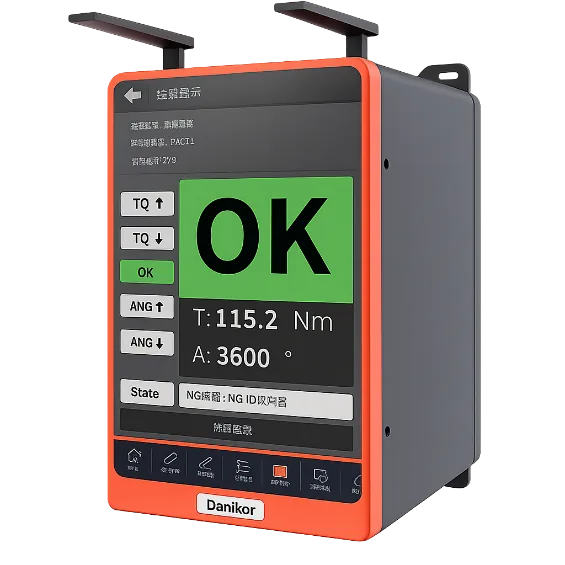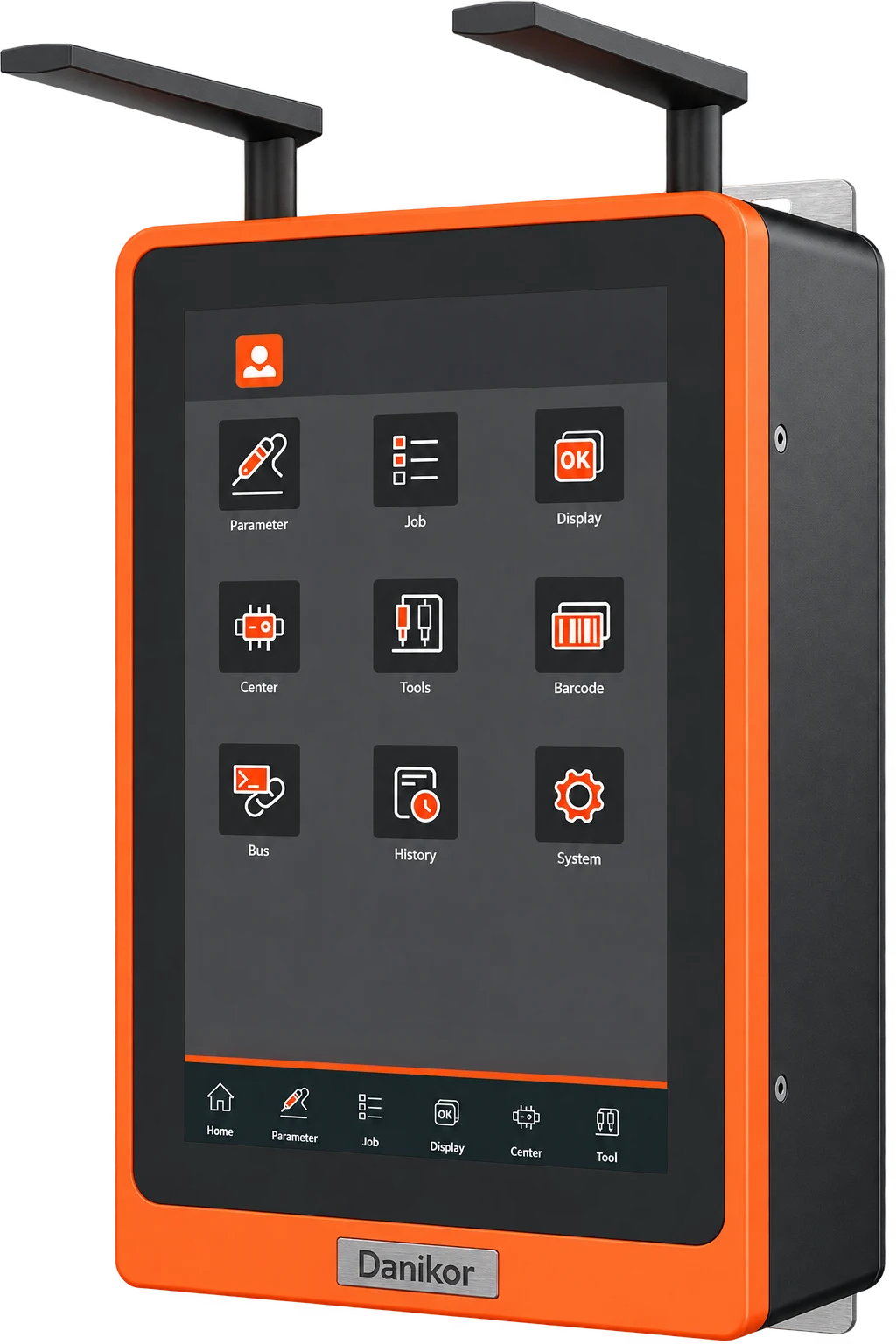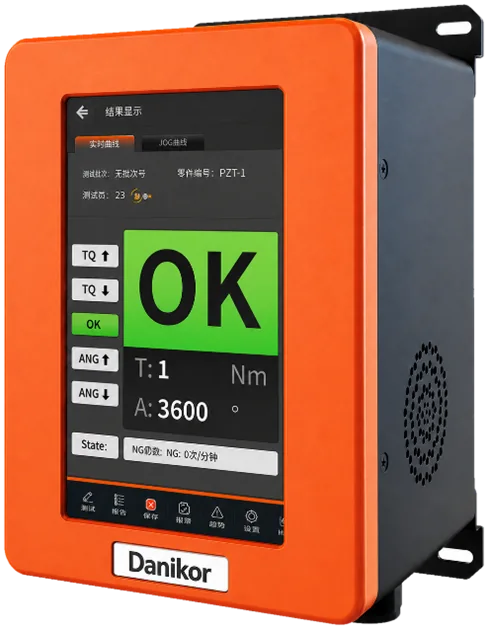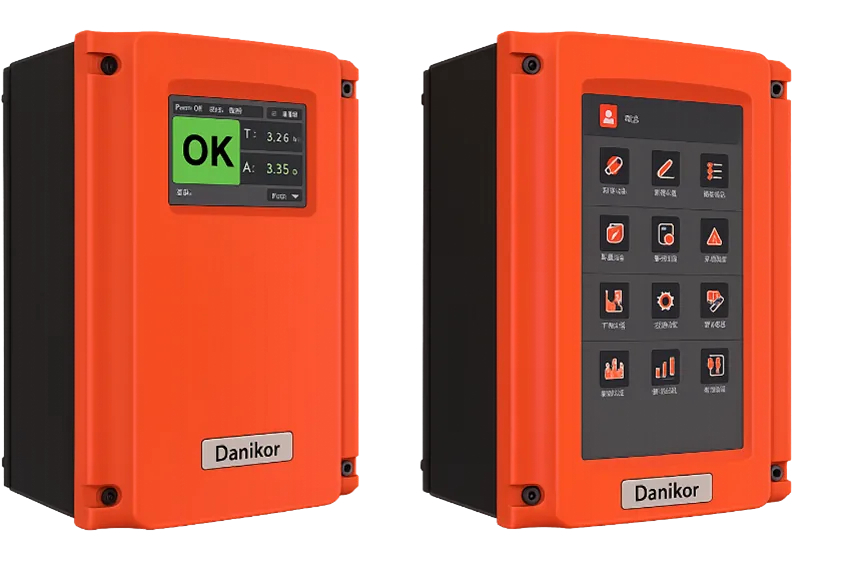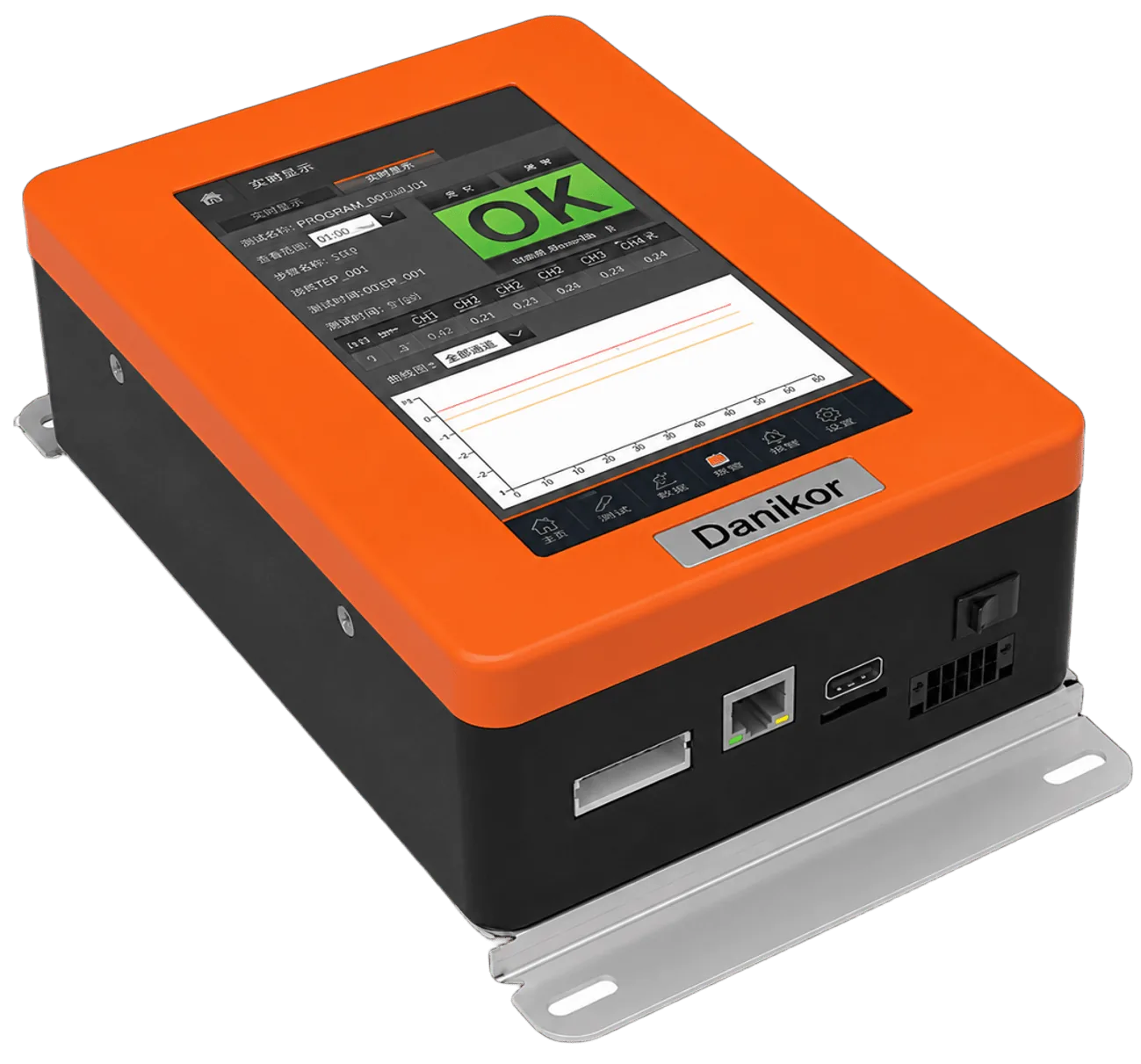
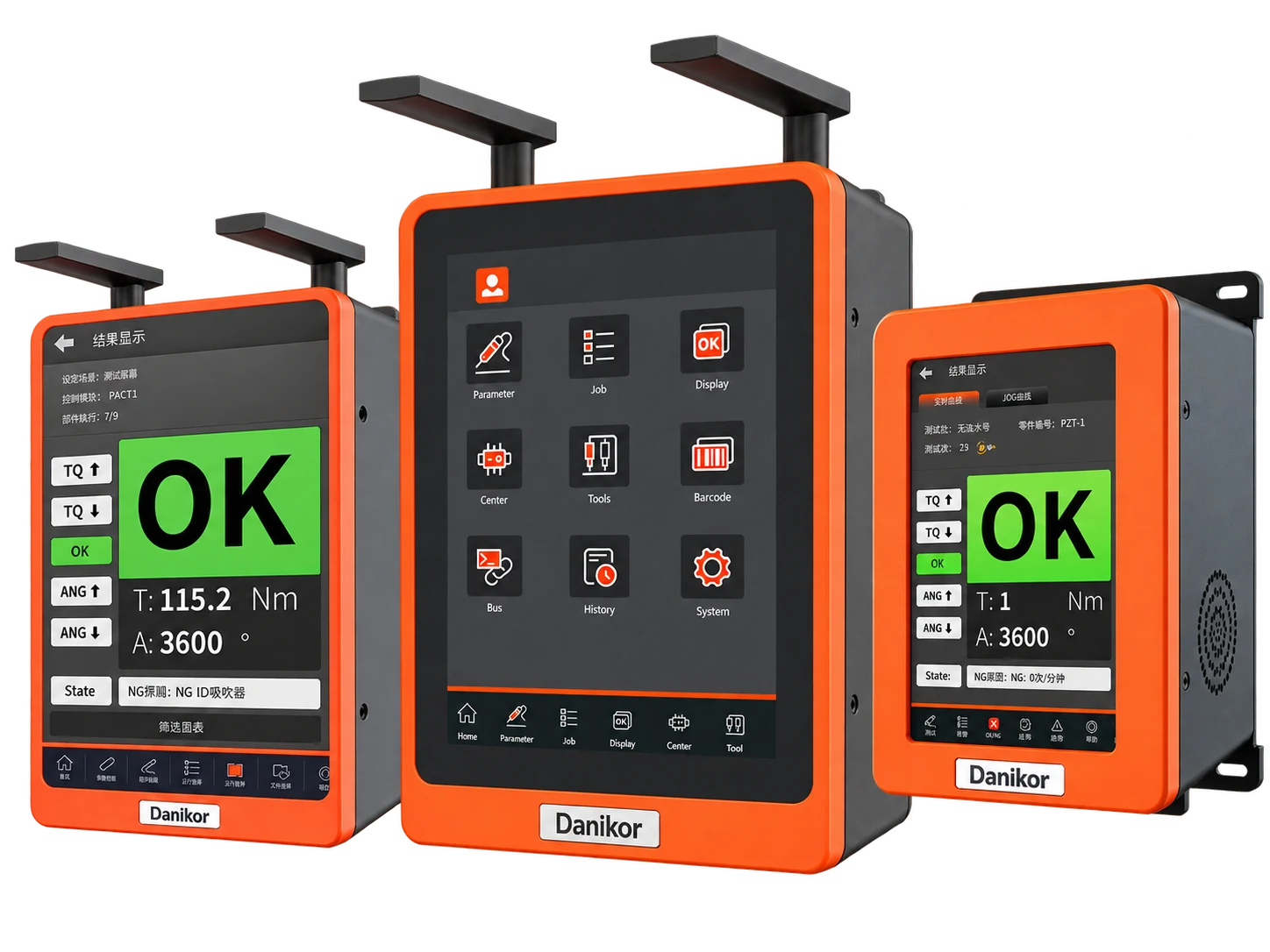
The Intelligence Behind Every Tightening Cycle
A screwdriver controller is the digital brain of your assembly station. It defines tightening strategies, validates every cycle in real time with OK/NG output, and stores torque, angle, time and curve data to feed your MES or quality system. TMG distributes and configures the CK, CM and CS platform — a complete family covering from high-demand automotive stations to flexible multi-product assembly cells.
Key Features Across the Platform
- High-order tightening strategies: clamp torque control, torque-angle method, dwell time, zero-speed hold and electric pulse tightening
- Real-time torque and angle monitoring with abnormality detection throughout the tightening cycle
- Configurable Psets and Jobs for multi-product lines — one controller replaces multiple setups
- Barcode binding for traceability: links tightening results to station, workpiece, Job or Pset (4 levels)
- Breakpoint resume: prevents data loss during network disconnection from external devices
- Multiple communication options: OP Protocol, Bus (Profinet / EtherCAT / EtherNet/IP), Modbus TCP and digital I/O
- Remote web platform (CK) and computer software (CM and CS) for parameter setup, overlay curve analysis and statistical reporting
Screwdriver Series Compatibility
The controller platform covers the full Danikor intelligent screwdriver lineup: TTC (corded, 4–480 Nm), TBD / TBE (cordless, 0.4–80 Nm), TCP (corded pulse, 0.4–20 Nm), TTA (fixed, 0.14–200 Nm) and the current-control TCD / TCA series — ensuring a matched system from tool to data.
Integration with Production Systems
All controllers support MES data sharing and upload. On the CK Series, the web platform enables parameter and strategy configuration, drag-and-drop strategy sequencing, tightening curve overlay and statistical reporting with full traceability. CM and CS are configured through computer software. Danikor is developing graphical multi-device management for the CK Series: screw feeders, screwdrivers, bit selectors, arms and reject (NG) bins in a single closed-loop cell.